Roofing
Roof replacement & repair
Architectural shingle, Class 4 impact-resistant, and standing-seam metal — installed as a system, not a surface.
Replacement
A roof is a system, not a layer of shingles
Most premature roof failures we're called out to look at aren't shingle failures. They're flashing, ventilation, or decking problems that somebody shingled over.
When we replace a roof we tear off to the deck, inspect and replace rotten decking, install synthetic underlayment, replace pipe boots and step flashing rather than reusing them, correct intake and exhaust ventilation, and only then lay the finish course. Then we run magnets over your whole property, because nobody should find roofing nails with a tire.
Materials we install
- Architectural asphalt shingle. The workhorse. Good looking, well-priced, 30-plus year product ratings.
- Class 4 impact-resistant shingle. Worth a real conversation in this market. Most Texas carriers discount premiums for Class 4 — often meaningfully — so the upgrade can pay itself back over several years while standing up to hail far better.
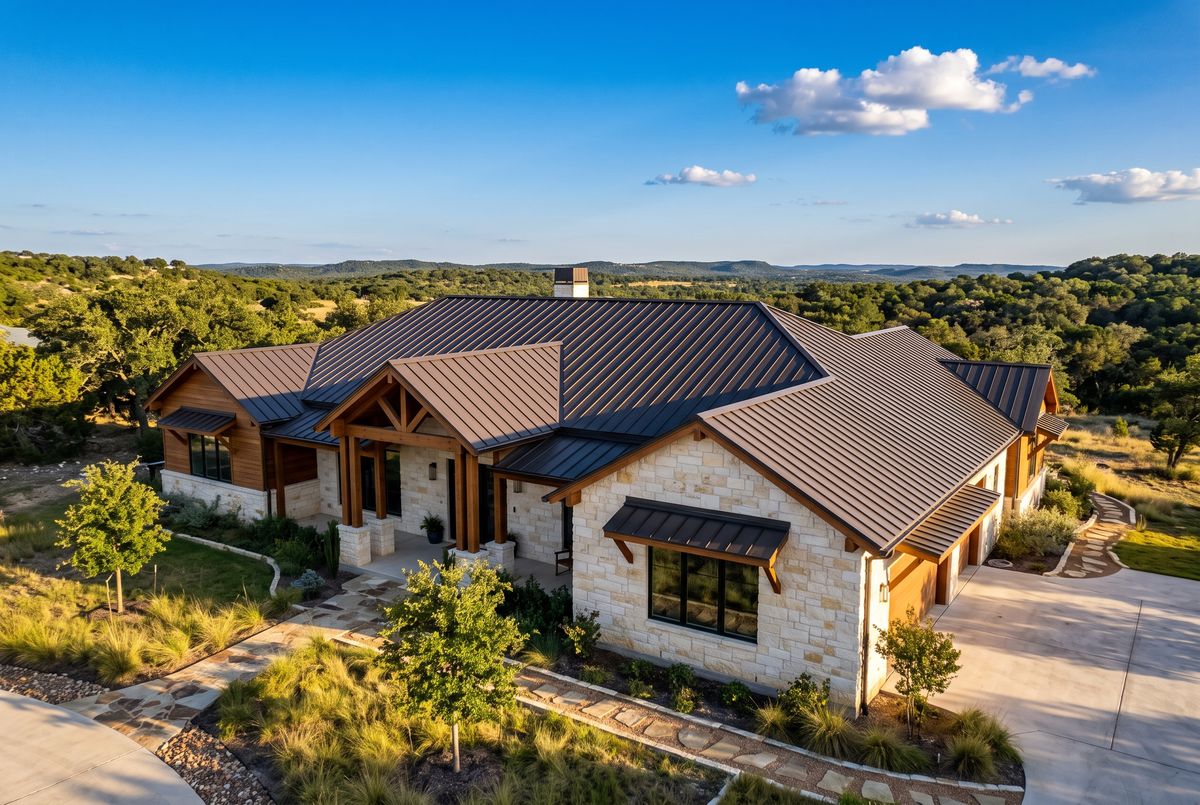
- Standing-seam metal. Long life, excellent in hail and heat, and the right look on a lot of Hill Country architecture. Higher up-front, lowest lifetime cost.
Insurance discounts for impact-resistant roofing vary by carrier and policy. Ask your agent what your specific policy offers before counting on it.
Signs it's time
- Granules collecting in your gutters or at downspout splash blocks
- Shingles curling, cupping, or with bald patches
- Any daylight or staining visible in the attic
- A roof that's 18+ years old and has been through a hail season or two
- Flashing rusted or pulling away at chimneys and walls
- Repeated repairs in the same spot
Repairs
Not every roof needs replacing, and we'll tell you when yours doesn't. Leaks around penetrations, storm-lifted shingles, failed pipe boots, damaged flashing, and small sections of wind damage are all repairable, and repairing them is often the right call.
What we won't do is sell you a replacement you don't need, or patch something we know is going to fail again next spring just to keep the invoice small.
Warranty
Manufacturer warranty on materials, plus our own workmanship warranty in writing. Ask us for the exact terms with your estimate — you get it on paper before any work starts.
How it goes
Four steps, no surprises
You shouldn't have to wonder whether anyone's going to call you back, when the crew shows up, or who to reach if something's wrong. Here's the whole thing.
-
01
Free inspection
We get on the roof, photograph every elevation, check your gutters and flashing, and show you what we found. No sales theater. It costs nothing to know the condition of your roof.
-
02
A written scope
You get an itemized scope in plain English — materials, quantities, what we're replacing and what we're leaving alone. Insurance claim or cash job, the paperwork is the same standard.
-
03
Installation done right
Tear-off, decking inspection, underlayment, flashing, ventilation, then the finish course. We protect your landscaping and run a magnet over the whole property before we leave.
-
04
Walkthrough & warranty
We walk it with you before we call it done. You get your warranty paperwork and a direct line to the owner — not a call center.
Straight answers
Questions homeowners actually ask
Shingle or metal for a Hill Country home?
Can you just go over the old shingles?
What about steep roofs?
Do you replace decking?
Get a straight answer about your roof.
Free inspection, every elevation photographed, written scope with real numbers.