Storm & Insurance Claims
Hail, wind, and the claim that follows
We document damage the way an adjuster needs it documented — then meet them on the roof.
A hailstorm rolls through, and within days there are trucks on your street and cards in your door. It's genuinely hard to tell who's legitimate, and the pressure to sign something fast is the whole point of the approach. So here's how this actually works, plainly.
Hail damage usually isn't visible from your driveway
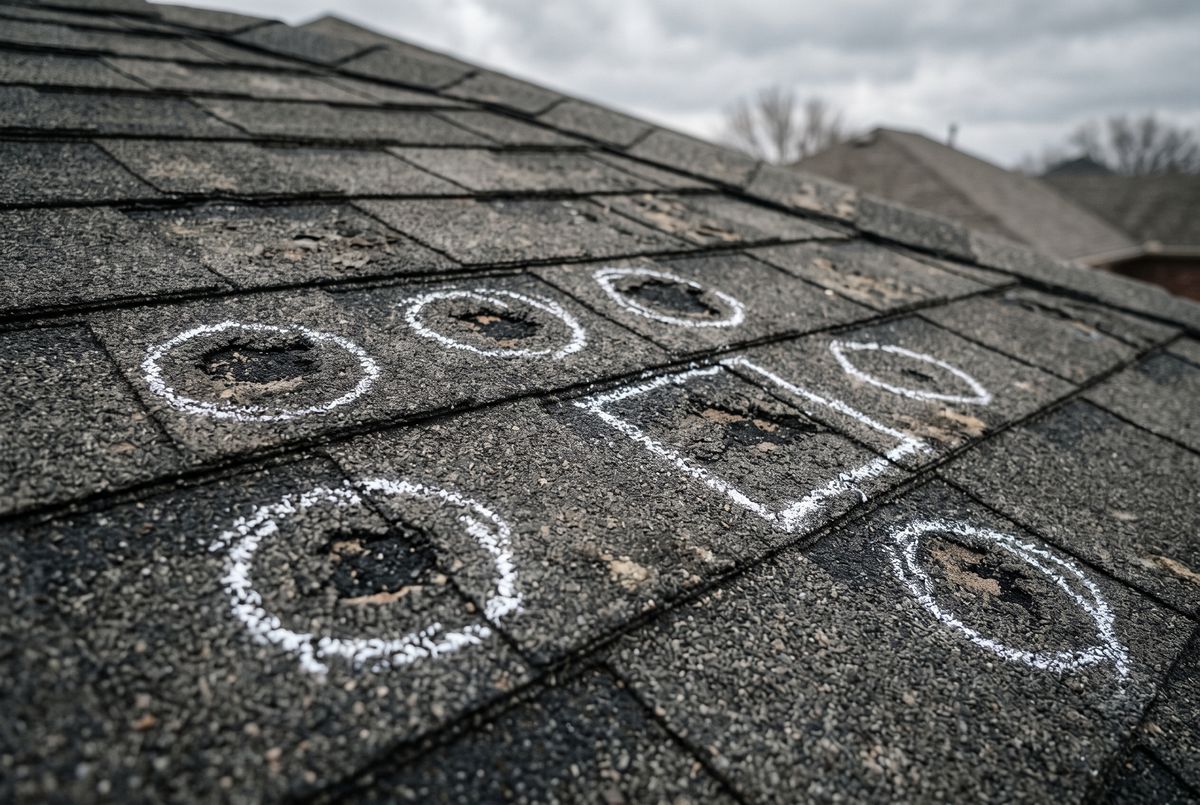
Impact bruising on architectural shingles knocks granules loose and weakens the fiberglass mat underneath without necessarily cracking anything you'd notice from the ground. Left alone, that weakened area is where the roof starts leaking two or three years later — often well after the window for filing a claim on that storm has closed.
That's why the inspection is a real inspection. We chalk test squares, count impacts per square, photograph soft metals — vents, valleys, flashing, gutters, and window wraps, which bruise visibly and corroborate what the shingles show — and shoot every elevation.
How a claim goes
- 01
Emergency protection first, if it's needed
Active leak or missing shingles? We tarp it. Most policies require you to take reasonable steps to prevent further damage, so acting quickly protects both your house and your claim.
- 02
Free documented inspection
We inspect and photograph everything, then give you a copy. You'll know what's up there before you decide whether to file at all — sometimes the damage is genuinely below your deductible and filing isn't in your interest.
- 03
You file with your carrier
You call your insurance company and open the claim. It's your policy and your claim; we're not going to file it for you or represent you to your insurer.
- 04
We meet your adjuster on the roof
We're there when they inspect, with our documentation in hand, so the scope reflects what's actually on the roof — including code items and details that get overlooked from the ground. We won't speak on your behalf, but we will make sure nothing gets quietly missed.
- 05
Scope review, and a supplement if it's short
If the approved scope leaves out work the roof genuinely needs, we re-document it and submit a supplement with photographs your carrier has to respond to. A first denial or a thin scope isn't necessarily the end of it.
- 06
We build the roof
Same standard, same warranty, whether it's a claim job or a cash job.
Where we're careful, and why you should be too
You will hear contractors in this market imply you'll pay little or nothing out of pocket, or offer to help you around your deductible. Under Texas law your deductible is yours to pay, and a contractor who offers to absorb, waive, or rebate it is asking you to participate in insurance fraud. It also tells you exactly what their paperwork looks like elsewhere.
We'll document your damage thoroughly and fight for a scope that reflects reality. We won't promise you an outcome your carrier hasn't approved, and we won't touch your deductible. What your policy covers depends on your policy — confirm the specifics with your carrier or agent.
Before you sign anything after a storm
- Ask for a local address that existed before the storm — and look it up.
- Ask for a certificate of liability insurance, naming them, in date.
- Get the workmanship warranty in writing, and ask who honors it in three years.
- Don't sign anything that assigns your claim benefits to the contractor.
- Never let anyone tell you your deductible is negotiable.
Straight answers
Questions homeowners actually ask
Should I file a claim at all?
Will filing raise my rates?
My claim was denied. Is that final?
How long do I have to file after a storm?
Do you charge for the storm inspection?
Storm came through? Get it documented.
Free inspection with full photo documentation you keep, whether you file or not.